

The Complete Buyer's Guide to Choosing DTF Ink, Powder, and Film for Consistent Textile Printing | MYRIAD MINDED

Over the past several years, Direct-to-Film (DTF) printing has emerged as one of the fastest-growing technologies in digital textile decoration. Compared with traditional screen printing, heat transfer vinyl (HTV), and even Direct-to-Garment (DTG) printing, DTF offers greater flexibility, shorter production cycles, and compatibility with a much wider range of fabrics. From cotton and polyester to blends, nylon, canvas, and performance textiles, DTF enables manufacturers and decorators to produce vibrant, durable graphics without the material limitations associated with many conventional printing methods.
As global demand for customized apparel, on-demand manufacturing, and small-batch production continues to expand, commercial print providers are investing heavily in DTF technology. However, experienced production managers increasingly recognize that printer hardware alone does not determine print quality. The consistency of every transfer depends on how well the three core consumables—DTF ink, TPU hot-melt powder, and PET transfer film—work together as an integrated system.
Selecting these materials independently can introduce compatibility issues that reduce production efficiency and product quality. Ink instability may contribute to nozzle clogging, unsuitable adhesive powder can affect wash durability and hand feel, while inconsistent film coatings may lead to poor ink reception, static contamination, or difficult release during transfer.
For this reason, professional buyers are shifting their focus from individual product specifications to complete material systems engineered for compatibility, consistency, and long-term production reliability. Understanding how these consumables interact has become one of the most important factors in achieving stable, high-quality textile printing while minimizing operational costs and reducing production downtime.
Why DTF Consumables Matter More Than the Printer
One of the most common misconceptions in digital textile printing is that investing in a high-end printer automatically guarantees superior print quality. In reality, experienced print providers know that consistent production depends just as much on the consumables as it does on the hardware itself.
Modern DTF printers, particularly those equipped with Epson printheads such as the i3200, are designed to deliver exceptional precision. However, even the most advanced equipment cannot compensate for unstable ink, poorly engineered adhesive powder, or inconsistent transfer film. These three consumables function as a complete printing system, and the performance of each directly influences the others.
For example, if the ink has poor pigment dispersion or unstable white ink suspension, printhead maintenance increases and color consistency gradually declines. If the TPU hot-melt powder melts unevenly or contains inconsistent particle sizes, the transfer may crack after washing, feel overly stiff, or exhibit weak adhesion to the fabric. Likewise, transfer film with an inconsistent coating or inadequate anti-static treatment can reduce ink acceptance, create powder contamination, and cause uneven peeling after heat pressing.
These issues rarely occur in isolation. In many production environments, print defects are the result of small compatibility differences between multiple consumables rather than a single defective component. Replacing only one material may solve one problem while unintentionally creating another.
For commercial printers managing demanding production schedules, this translates into higher maintenance costs, increased material waste, and reduced equipment utilization. More importantly, inconsistent print quality can affect customer satisfaction and limit a company's ability to secure repeat business.
As a result, purchasing strategies are changing. Instead of sourcing ink, powder, and film independently, many professional print providers now prefer integrated consumable systems that have been developed and validated together. Matching the surface characteristics of the film, the rheological properties of the ink, and the thermal behavior of the adhesive powder helps reduce compatibility risks while improving production stability, wash durability, and overall transfer quality.
For buyers, the goal is no longer simply to purchase individual products. It is to build a reliable production workflow in which every component performs consistently from printing and powder application to heat transfer and repeated laundering. That systems-based approach has become one of the defining characteristics of successful commercial DTF production.
What Makes High-Quality DTF Ink, Powder, and Film?
Selecting DTF consumables is no longer simply about comparing prices or product specifications. As commercial textile printing becomes increasingly standardized and quality expectations continue to rise, buyers are paying closer attention to the engineering behind each consumable and, more importantly, how they perform together throughout the printing process.
Although DTF ink, TPU hot-melt powder, and PET transfer film each serve a different purpose, they function as a single production system. A weakness in any one component can reduce print quality, increase maintenance, or shorten the lifespan of the finished garment. Understanding the technical characteristics of each material helps buyers make more informed purchasing decisions and build a more reliable production workflow.
What Makes High-Quality DTF Ink?
DTF ink forms the visual foundation of every transfer. Beyond delivering vibrant colors, it must remain chemically stable throughout storage, printing, powder application, and heat transfer. Consistent ink performance is especially important in high-volume production, where even minor formulation differences can affect printhead reliability and color consistency.
Professional buyers typically evaluate DTF inks based on several key characteristics:
Stable pigment dispersion to minimize sedimentation and maintain smooth ink flow.
Reliable white ink suspension, reducing titanium dioxide settling and lowering the frequency of nozzle maintenance.
Controlled viscosity and surface tension, ensuring accurate droplet formation and consistent printing across different production speeds.
High color density and wide color gamut, producing vivid images with smooth gradients and sharp detail.
Excellent wash and rub fastness, helping graphics maintain their appearance after repeated laundering.
Rather than selecting ink solely according to color performance, experienced print providers increasingly prioritize long-term stability because reliable formulations reduce downtime, extend printhead life, and improve overall production efficiency.
How Does TPU Hot-Melt Powder Affect Transfer Performance?
While ink creates the image, TPU hot-melt powder determines how securely that image bonds to the fabric. It directly influences adhesion, elasticity, washing durability, and the overall hand feel of the finished garment.
Selecting the appropriate powder depends on both the fabric type and the application.
Fine powders are commonly preferred for detailed graphics, lightweight garments, and stretch fabrics because they produce a thinner transfer layer and a softer feel. Coarser powders are better suited for heavyweight textiles such as canvas, workwear, and denim, where stronger mechanical bonding is required.
Beyond particle size, buyers should also evaluate:
Uniform melting behavior, ensuring complete fusion during curing.
Consistent particle distribution, preventing uneven adhesion.
High elasticity, allowing transfers to stretch with the fabric without cracking.
Stable washing performance, maintaining adhesion through repeated laundering.
Low residue after curing, reducing unwanted powder marks and improving production cleanliness.
A well-engineered TPU powder helps create transfers that remain flexible, durable, and comfortable while reducing common production defects such as edge lifting or brittle cracking.
How Does PET Transfer Film Influence Print Quality?
Transfer film is often underestimated, yet it plays a critical role throughout the DTF workflow. As the carrier for both ink and adhesive powder, its coating directly affects printing precision, powder distribution, and release performance during heat transfer.
A premium DTF film should provide:
Consistent ink reception, allowing precise dot placement without excessive spreading.
Uniform release coating, ensuring clean separation after heat pressing.
Effective anti-static treatment, preventing stray powder from adhering to unprinted areas.
Excellent dimensional stability, minimizing deformation during curing and transfer.
Support for hot-peel or cold-peel production, enabling manufacturers to choose the workflow best suited to their production environment.
High-quality film improves transfer consistency while reducing production waste caused by uneven coating, difficult peeling, or static-related contamination.
Why Is System Compatibility More Important Than Individual Specifications?
Many printing problems are mistakenly attributed to a single consumable when they are actually caused by incompatibility between multiple materials.
For example, an ink with excellent color performance may not interact optimally with a particular film coating. Likewise, a high-quality adhesive powder may fail to achieve its full bonding strength if curing characteristics differ from the ink formulation. Even when each material performs well independently, combining products from different suppliers can introduce variables that affect print quality, washing durability, or production efficiency.
This is why more commercial print providers are moving toward integrated DTF consumable systems that are engineered and validated as a complete solution.
When ink chemistry, powder characteristics, and film coatings are designed to work together, manufacturers can achieve more stable printing, cleaner powder application, improved transfer consistency, and fewer production interruptions. The result is a more predictable workflow with lower maintenance requirements and higher first-pass yield—an increasingly important advantage for businesses operating high-volume production lines.
Rather than asking which individual product performs best, professional buyers are increasingly asking a different question:
Have these consumables been engineered, tested, and optimized to perform together?
For commercial textile printing, that systems-based approach is becoming one of the clearest indicators of long-term production reliability and total operating value.
Case Study: Building an Integrated DTF Manufacturing System
As commercial DTF printing continues to expand worldwide, many distributors and print providers are no longer looking for individual consumables from multiple suppliers. Instead, they increasingly prefer manufacturers capable of delivering an integrated printing system in which inks, adhesive powders, and transfer films are developed, tested, and optimized together.
This systems-based approach helps reduce compatibility risks, simplify procurement, and improve production consistency across different printer platforms and application environments.
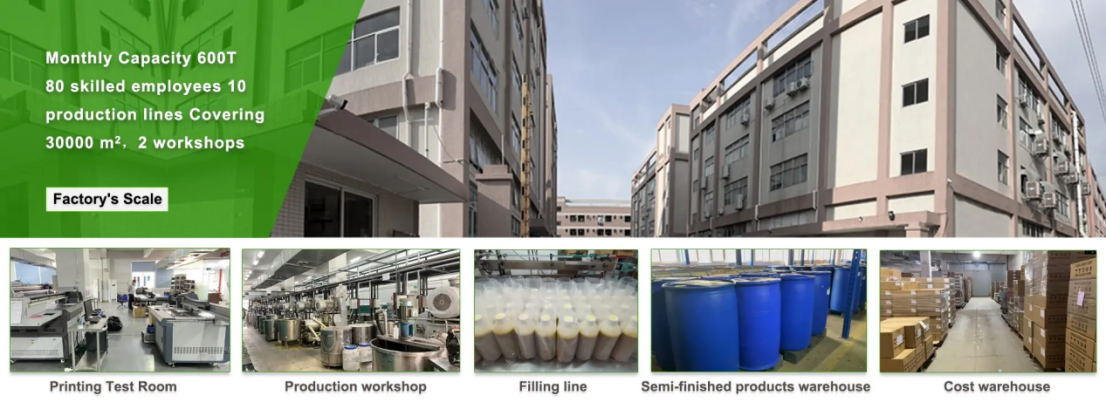
MYRIAD MINDED Colors Technology (Zhuhai) Co., Ltd. has built its DTF product portfolio around this philosophy. Rather than developing ink, powder, and film as independent products, the company engineers them as complementary components within a unified material system. Each formulation is evaluated for its interaction with the others, helping ensure consistent ink transfer, stable powder adhesion, clean film release, and reliable wash durability throughout commercial production.
Supporting this development process is more than 18 years of experience in digital inkjet materials and an annual production capacity of approximately 8,000 metric tons. The company operates 10 specialized R&D laboratories and maintains an engineering team that represents more than 30% of its workforce, focusing on formulation chemistry, material compatibility, and application development. Product validation is carried out using nearly 100 industrial printing systems, allowing engineers to evaluate performance under production conditions similar to those encountered by commercial print providers.
Quality management follows internationally recognized standards, including ISO 9001, ISO 14001, and ISO 45001, while selected products comply with global regulatory requirements such as REACH, RoHS, and OEKO-TEX® ECO PASSPORT. These certifications reflect not only product quality but also manufacturing consistency, environmental responsibility, and traceable production processes—factors that have become increasingly important for distributors serving international apparel brands.
The company's integrated DTF solution includes nano-pigment inks, TPU hot-melt powders, and matte PET transfer films available in multiple widths and peel options to support a wide range of textile decoration applications. By validating these consumables as a complete system rather than as separate products, MYRIAD helps customers reduce common production challenges such as white ink sedimentation, inconsistent powder adhesion, transfer defects, and premature cracking after repeated washing.
For commercial print providers, selecting an integrated manufacturing partner offers advantages beyond simplified purchasing. Consistent material compatibility contributes to smoother production, lower maintenance requirements, more predictable print quality, and improved operational efficiency over the long term. As production volumes continue to increase, these factors often become more valuable than short-term savings achieved by sourcing individual consumables from multiple suppliers.
The Future of DTF Printing: Why Integrated Material Systems Will Define the Next Stage of Growth
As digital textile decoration continues to evolve, the competitive advantage of commercial print providers will depend on more than faster printers or lower production costs. Increasingly, success will be determined by the stability of the entire printing workflow—from material compatibility and production consistency to environmental compliance and long-term technical support.
This shift is changing how professional buyers evaluate suppliers. Rather than sourcing individual consumables from multiple vendors, many distributors and production facilities are choosing integrated material systems that have been engineered, tested, and validated to perform together. The goal is not simply to improve print quality, but to reduce downtime, simplify production management, and deliver predictable results across every production batch.
For manufacturers, this trend highlights the growing importance of continuous research, standardized quality control, and close collaboration with customers. Companies capable of combining formulation expertise with scalable manufacturing and application engineering will be better positioned to support the future of commercial textile printing.
Conclusion
Choosing DTF consumables is no longer a simple purchasing decision. Ink, adhesive powder, and transfer film work together as a single production system, and their compatibility directly influences printing efficiency, transfer quality, washing durability, and long-term operating costs.
For commercial print providers, evaluating suppliers by engineering capability, manufacturing consistency, quality management, and technical support offers greater long-term value than comparing individual product specifications or price alone.
As the DTF industry continues to expand, integrated material solutions are expected to become the preferred choice for manufacturers seeking higher productivity, more consistent quality, and stronger competitiveness in an increasingly demanding global market.
About MYRIAD MINDED Colors Technology (Zhuhai) Co., Ltd.
MYRIAD MINDED Colors Technology (Zhuhai) Co., Ltd. specializes in the research, development, and manufacturing of digital inkjet inks and integrated printing materials for commercial and industrial applications. Its product portfolio includes DTF inks, TPU hot-melt powders, PET transfer films, sublimation inks, eco-solvent inks, LED-UV inks, UV DTF inks, and digital textile printing solutions.
Backed by more than 18 years of industry experience, advanced R&D capabilities, internationally recognized quality management systems, and OEM/ODM manufacturing expertise, the company works with distributors, printer manufacturers, and commercial print providers in markets worldwide.
For more information about DTF printing materials, technical resources, or OEM manufacturing services, visit www.myriadminded.com.
Frequently Asked Questions
What is the most important factor when choosing DTF consumables?
Rather than evaluating ink, powder, or film independently, professional buyers should consider overall system compatibility. Consumables engineered to work together typically provide more stable printing, better transfer quality, and improved production efficiency.
Why does white DTF ink sometimes clog printheads?
White ink contains titanium dioxide (TiO₂), a dense pigment that naturally settles over time. High-quality formulations use advanced dispersion technology to improve suspension stability, while proper printer maintenance and ink circulation further reduce the risk of sedimentation.
How do I choose the right TPU hot-melt powder?
The choice depends on fabric type, transfer requirements, and production conditions. Fine powders generally provide a softer feel and better detail reproduction, while coarser powders offer stronger adhesion for heavier fabrics.
What features should a high-quality DTF transfer film have?
Professional-grade PET transfer films should provide consistent ink absorption, uniform release coatings, anti-static treatment, dimensional stability, and reliable hot-peel or cold-peel performance to support efficient production.
Why do many commercial printers purchase integrated DTF systems?
Using ink, powder, and film that have been developed and tested together helps reduce compatibility issues, improve production consistency, minimize maintenance, and achieve more reliable long-term printing performance.
Myriad Minded Colors Technology (Zhuhai) Co., Ltd.
Myriad Minded Colors Technology (Zhuhai) Co., Ltd.
email us here
Legal Disclaimer:
EIN Presswire provides this news content "as is" without warranty of any kind. We do not accept any responsibility or liability for the accuracy, content, images, videos, licenses, completeness, legality, or reliability of the information contained in this article. If you have any complaints or copyright issues related to this article, kindly contact the author above.
